Living Infrastructure: Beyond the Static Museum
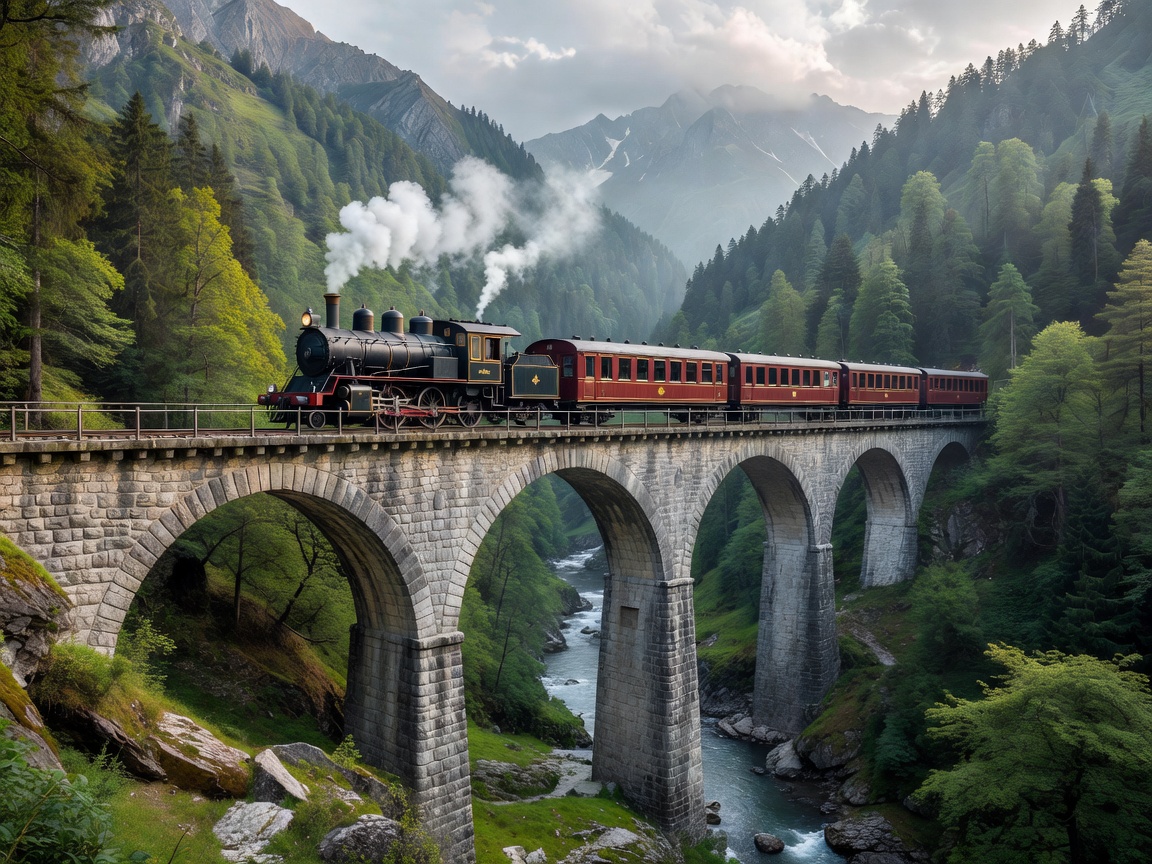
There is no substitute for experiencing railway technology in its natural, dynamic habitat: climbing a 1-in-40 gradient, puffing through mountain tunnels, and decelerating into sunlit country passing loops. European heritage railways are not static stage sets; they are fully certified railway operating companies carrying hundreds of thousands of passengers annually across challenging terrain.
The movement took root in Great Britain in 1951 with the preservation of the Talyllyn Railway in Wales — the first railway in the world to be taken over and operated by a volunteer preservation society. Since then, the model has spread across the continent. Today, you will find active heritage railways in every corner of Europe: the Blonay-Chamby museum railway clinging to the heights above Lake Geneva, the Harz Narrow Gauge Railways (HSB) operating year-round scheduled steam services up Mount Brocken in Germany, and the Welsh Highland Railway navigating the Snowdonia mountains.
The Unsung Permanent Way: Track Maintenance
Passengers marvel at the steam locomotive, but without a rigorously maintained "permanent way" (the trackbed, ballast, ties/sleepers, and rail), no train can turn a wheel. Maintaining heritage track is a relentless, hands-on engineering discipline undertaken largely by volunteer gangs.
Heritage permanent-way teams confront unique engineering tasks:
- Timber Sleeper Renewal: Preserved railways rely predominantly on creosoted or pressure-treated timber sleepers, which absorb axle vibrations better than rigid concrete ties on winding branch lines. Gangs routinely replace hundreds of decayed sleepers per kilometre using mechanical tie tampers and hand ballast forks.
- Bullhead Rail and Keying: Historic British routes often feature traditional bullhead rail held inside cast-iron chairs with hammered wooden or spring-steel keys, requiring regular visual patrols to ensure gauge stability.
- Coring and Drainage: Mountain railways in Switzerland, Austria, and northern Europe face steep runoff. Clearing stone culverts, retaining walls, and rock-fall nets is critical to prevent embankment slippage during spring thaws.
The Volunteer Ecosystem
The survival of European heritage railways relies on an extraordinary volunteer ecosystem. Qualified drivers, firemen, signalmen, guards, and booking clerks undergo rigorous competency-based training matching national rail standards. In many European jurisdictions, heritage lines must operate under safety management systems audited by state rail inspectorates, proving that historical equipment can run with modern safety integrity.
Mountain Engineering: Rack Systems & Narrow Gauge
Nowhere is railway heritage more breathtaking than on Europe's steep mountain lines. Standard adhesion railways can rarely tackle gradients steeper than 4% or 5% without slipping. In the late 19th century, Swiss engineers Niklaus Riggenbach and Roman Abt developed toothed rack systems mounted between the running rails, engaging a drive cogwheel beneath the locomotive.
Lines like the Achenseebahn in Austria (operating original 1889 steam cog locomotives) and the Brienz Rothorn Bahn in Switzerland demonstrate how rack systems opened inaccessible alpine summits to tourism. Narrow gauge widths — ranging from 600 mm industrial lines to the classic 760 mm "Bosnian gauge" and 1,000 mm metre gauge — allowed civil engineers to carve tight curves around rocky promontories with minimum earthworks, leaving an indelible mark on European landscape topography.
Planning an Authentic European Railway Journey
When selecting a heritage railway to visit, consider the diversity of traction and scenery. Combine a day on an English standard-gauge country branch line (such as the North Yorkshire Moors or Bluebell Railway) with a journey across the Swiss metre-gauge Albula and Bernina lines (UNESCO World Heritage sites) or the French Vivarais steam line through the Ardèche gorges. Each route offers a masterclass in regional railway identity.