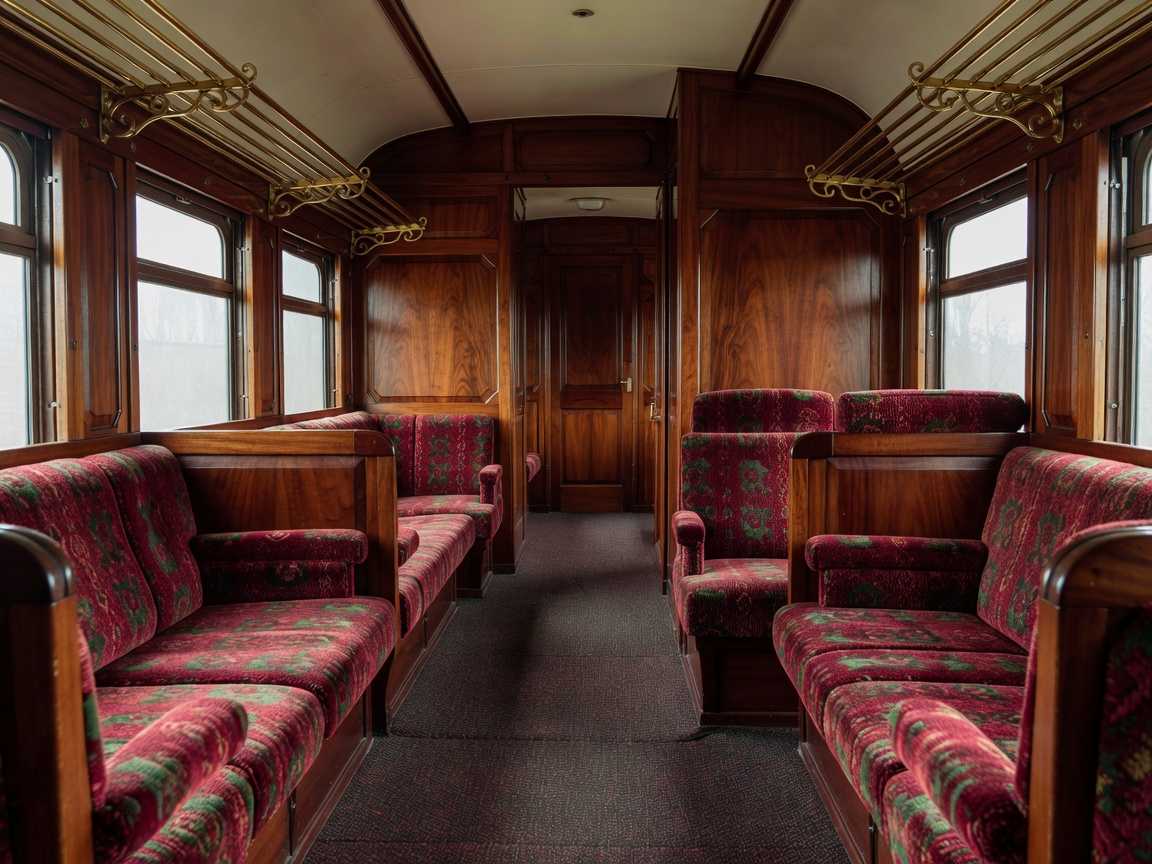
The Overlooked Masterpiece: Railway Coach Architecture
While locomotives command public fascination, railway carriages provided the human interface to train travel. Behind their elegant exterior livery lies complex, layered engineering that must withstand decade after decade of torsional stress, weather extremes, and passenger traffic. Carriage restoration is one of the most multidisciplinary fields in heritage preservation, demanding joinery, structural welding, upholstery trimming, glazing, and pneumatic plumbing.
In pre-war Europe, carriage construction relied on timber superstructures mounted onto heavy steel or wrought-iron underframes. British companies like the London and North Eastern Railway (LNER) famously built passenger stock from seasoned Burmese teak, admired for its natural silica content and resistance to fungal rot. Meanwhile, German and French builders pioneered all-welded steel coaches with deep skirtings and streamline profiles, such as the German Schürzenwagen of the late 1930s. Restoring these varied structures requires an intimate knowledge of materials science and historical construction standards.
Step-by-Step Restoration in the Carriage Shed
A comprehensive carriage overhaul can easily require between 10,000 and 20,000 volunteer and staff hours over four to seven years. The process typically unfolds across five critical phases:
- Deconstruction and Condition Mapping: The coach is stripped of its interior fittings, seating, luggage racks, and partition walls. Every component is labeled, catalogued, and photographed. Structural timber pillars are inspected for dry rot, particularly around window sashes where water ingress frequently occurs.
- Underframe and Bogie Overhaul: The coach body is jacked up using synchronized synchronized screw jacks, allowing the bogies (trucks) to be rolled out. Bogie wheelsets are checked for axle fatigue using ultrasonic testing, leaf and coil springs are tested for deflection, and white-metal or roller bearings are repoured or renewed.
- Structural Carpentry & Panelling: Damaged teak or ash framing members are scarfed with replacement hardwood using period-accurate jointing techniques. Exterior panels — whether galvanised steel or matchboard timber — are re-hung and countersunk.
- Braking & Safety Systems: The underframe air or vacuum brake cylinders are stripped down, fitted with fresh leather or nitrile rolling rings, and tested to ensure fail-safe emergency application under load.
- Interior Trim and Livery Finishing: Seats are re-webbed, coiled springs re-tied with jute cord, and authentic moquette fabric — woven to archival patterns — is trimmed and fitted. The coach exterior receives multiple coats of hand-brushed undercoat, gloss coach enamel, and protective varnish, rubbed down between coats with pumice paste.
The Art of Moquette and Period Textiles
Moquette — a dense, cut-pile woolen textile woven onto a cotton warp — has been the staple fabric of European train seating since the late 19th century. Its high durability, flame retardance, and sound-dampening qualities made it indispensable. Today, restoration trusts work with traditional heritage textile mills in Yorkshire, Lyon, and Saxony to reproduce authentic Art Deco, Bauhaus, and mid-century geometric patterns from archived original swatches.
Safety Standards in Operational Preservation
Preserving carriages for dynamic passenger service on heritage railways requires rigorous adherence to modern safety standards without destroying historic fabric. Coaches must incorporate emergency passenger communication cords, shatter-resistant laminated safety glass for windows, non-combustible seat filling materials, and secure slam-lock or secondary door-interlock mechanisms to protect passengers on modern lines.
Balancing these modern regulatory mandates with authentic period appearance is the true mark of master restorers. When you board a restored teak carriage, feel the soft spring of the horsehair cushions, and slide open a mahogany compartment door, you are touching the living craftsmanship of hundreds of dedicated restoration specialists.